Neriad Church Revenant Bounty
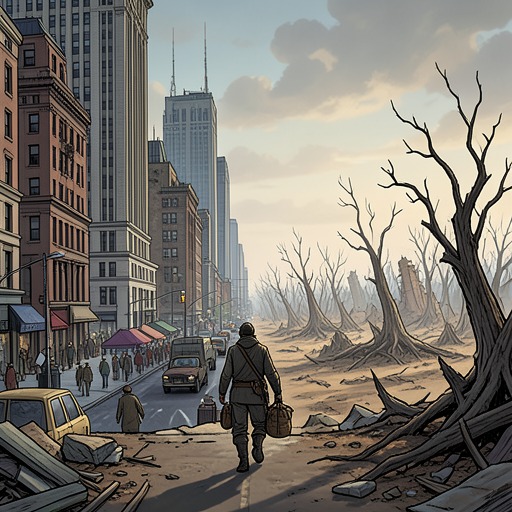
The Calamitous BobThe Neriad Church Revenant Bounty is a Church of Neriad system that pays people for killing revenants in the Deadlands and nearby frontier. Its stated rate is one iron bit for each revenant head, making the policy both a religious defense measure and a dependable, if modest, source of income for mercenaries willing to enter a region saturated with black mana.
Definition and Operation
The bounty does not require hunters to transport severed revenant heads back to the church. A church representative can inspect the remains, measure the hunters’ work, and exorcise the corpses personally. Alternatively, hunters can use a magic tool to touch the burnt-out husks of revenants they killed themselves. These verification methods allow the Church of Neriad to reward confirmed extermination without creating the logistical and sanitary burden of moving undead remains across the frontier.
The policy is presented as stable employment rather than heroic enrichment. Revenant hunting provides regular income, but it is described as neither exciting nor especially lucrative. Its practical attraction lies in consistency: enterprising people can base themselves in Kazar, launch expeditions into the Deadlands, and earn money by reducing the undead population around the region’s settlements.
Economic and Religious Infrastructure
The bounty exists within a much larger Church of Neriad economy. Neriad is worshipped across much of the known world, even more widely than Maranor, the goddess of war. Retired warriors leave assets to the church in their wills, including land, vineyards, and factories; donations and the manufacture of powerful items from monster parts provide additional revenue. This wealth gives the church the means to finance expeditions and treat revenant suppression as an investment rather than an isolated charitable payment.
The logic is explicitly preventative. It is cheaper to stop revenants from gathering in large numbers than to absorb a full undead invasion later. The bounty therefore converts religious wealth into dispersed frontier labor: small mercenary bands perform repeated local clearances, limiting the accumulation of a threat that would otherwise demand far more soldiers, supplies, and organized force.
The Church of Neriad also acts as an employer and coordinator. It is the main employer of the small mercenary companies operating in Kazar, with three such companies present at one point, although their membership and presence change with the seasons. The church’s own warriors and volunteers take a more defensive role, while mercenaries are paid to thin the undead population around the largest population centers.
Frontier Conditions and Military Roles
The bounty is necessary because the Deadlands continually replenish the revenant threat. People who die in the wilderness may leave enough of their bodies intact to become revenants. Those undead can then walk to the Deadlands, where the ambient mana sustains them indefinitely. Even a sustained hunting effort therefore confronts a continuing flow of new bodies rather than a finite population.
The region’s black mana also restricts who can participate. So long as the land remains saturated with it, only people able to resist its effects through magic or protective armor dare travel beyond the ring of forts. The bounty may offer a stable wage, but the work remains physically and magically dangerous, and the mana gradually burdens even experienced adventurers.
The church’s military organization reflects the difference between routine control and emergency response. Mercenaries handle regular population thinning near major settlements. Church forces focus on defense, scouting, and gathering information, while larger extermination columns are rare because of the logistics required to deploy them. The church’s principal fort keeps temple guards and holy warriors ready for rapid attacks, particularly when necromancers begin assembling a large force.
Social Effects and Narrative Significance
Kazar’s strong mercenary presence follows directly from this policy. The town lies near the boundary between the two sides of Enoria’s civil war, but it has little strategic value in that conflict. Its importance instead comes from its position as a church-backed base for Deadlands expeditions. The bounty gives otherwise itinerant fighters a reason to gather there and links local commerce, religious authority, and frontier defense.
The system also reveals the Church of Neriad as more than a purely devotional institution. It pays wages, coordinates armed groups, verifies kills, maintains defensive forces, and manages the resources needed to support visitors and mercenaries. Its activity reaches into housing as well: church-owned estates south of Kazar’s walls are available to visiting dignitaries and their retinues, with the smallest estate rented for three gold talents over three months. The same institution that funds undead hunters can therefore provide the material framework in which frontier personnel live and work.
The bounty’s limits are sharply visible. Despite many people working to reduce their numbers, revenants remain numerous because deaths in the wilderness continually feed the Deadlands. The policy suppresses accumulation rather than solving the source of the problem. Its recurring payments, inspection procedures, and defensive hierarchy form a durable containment system, but the setting ensures that containment remains an endless task rather than a final victory.